American Society of Plastic Surgeons
For Medical Professionals
 

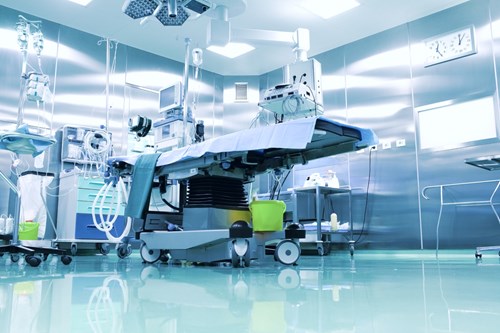
10 features of a safe operating room


If you're having plastic surgery, you're probably putting 100% of your focus on choosing your surgeon. But where you have your surgery is as important as who does your surgery. An excellent surgeon is likely to operate in a safe operating room, which means one that has been accredited by a recognized national certifying agency.

How can you tell if it's accredited? Ask to see photos of the OR and look for:

  1. Venetian blinds on the windows
  2. Carpeting on the floor
  3. A sink in the room
  4. A baseboard where the wall meets the floor.

These things are not allowed in an operating room. Why not? Imagine the difficulty cleaning Venetian blinds if fluid gets sprayed. If it's difficult, how often do you think it gets done?

Or if blood or pus spills on the carpet, how is it disinfected between cases?

And that sink? Is the drain really something you want in the same room as your open wound?

How about those baseboards? Fluid spray and bacteria can reside along the seams of where the baseboard meets the walls.

Your surgery should be done in an accredited operating room for one reason: YOUR SAFETY.

Your safety matters

There's more to accreditation than the physical characteristics you can see. The other features are invisible to the eye, but they impact patient safety:

  1. Peer review: Surgeons serve as monitors for each other to make sure safety measures and standard of care are followed on a regular basis.
  2. Data tracking: Infections, complications, sterilization checks, and other data are monitored and measured for patient safety.
  3. Fire, Earthquake, and other safety protocols are reviewed.
  4. Drug tracking, expiration checks, and emergency medical supplies are kept up to date.
  5. Standards are set so that deep levels of anesthesia are performed by an anesthesia professional (physician anesthesiologist or a CRNA) and all staffing positions are filled with certified or licensed individuals appropriate for the job.
  6. Medical records are checked to make sure they're complete and up-to-date.
  7. Quality management to ensure best standards are conducted and reviewed.
  8. Protocols are checked with every three-year-review.
  9. Patient care and treatment are reviewed.
  10. A patient's rights and responsibilities are prominently displayed.

Patient safety is extremely expensive

Most office surgical facilities are unaccredited, functioning without inspections or peer review. Why would a surgeon operate in a facility that isn't accredited?

One big reason: Patient safety is extremely expensive. It's much, much cheaper to run an unaccredited facility. Don't be fooled by doctors promoting the safety of surgery done under local anesthesia. They may be masking an unaccredited facility and the inability to offer general anesthesia.

How to check accreditation

If you're planning to have plastic surgery, confirm that your surgeon will be operating in a facility that has been accredited by one of the following nationally recognized agencies:

  1. The American Association for Accreditation of Ambulatory Surgery Facilities, Inc., accessible at www.aaaasf.org
  2. Accreditation Association for Ambulatory Health Care, Inc., accessible at www.aaahc.org
  3. Institute for Medical Quality, accessible at www.IMQ.org
  4. Joint Commission on Accreditation of Health Care Organization, accessible at www.jointcommission.org
  5. State-licensed
  6. Medicare-certified

Minimize your risks by doing your homework well before the day of your surgery. (You don't want to be in a facility without a backup generator if the power goes out!)

The surgeon who operates in an accredited operating room probably cares as much about your safety as you do, and that's comforting to know.

For more information, including a list of ASPS plastic surgeons in your community, please use our Find a Plastic Surgeon tool.

*Originally published on Plastic Surgery Associates of Santa Rosa


The views expressed in this blog are those of the author and do not necessarily reflect the opinions of the American Society of Plastic Surgeons.


Logo

Surgeons In Your Area

Raymond Janevicius Headshot

Raymond Janevicius, MD

U.S. Board Certified
214 Wood Glen Lane
Oak Brook, IL 60523
United States

16309411410

David Dreyfuss Headshot

David Dreyfuss, MD

U.S. Board Certified
801 MacArthur Boulevard, Suite 206
Munster, IN 46321
United States

1815806-9400

Sandeep Jejurikar Headshot

Sandeep Jejurikar, MD

U.S. Board Certified
Suite 106, 3800 Highland Avenue
Downers Grove, IL 60515
United States

16309600023

Nabil Barakat Headshot

Nabil Barakat, MD

U.S. Board Certified
Suite 3200, 1200 South York Road
Elmhurst, IL 60126-4513
United States

1630359-6888

Jerry Chow Headshot

Jerry Chow, MD

Canada Board Certified
11947 S. Harlem Avenue, # 100
Palos Heights, IL 60463
United States

1708349-3388

Iris Seitz Headshot

Iris Seitz, MD, PhD

U.S. Board Certified
Suite 207, 120 Spalding Drive
Naperville, IL 60540
United States

16306466020

Robert Paresi Headshot

Robert Paresi Jr., MD

U.S. Board Certified
Suite 100, 2001 Butterfield Road
Downers Grove, IL 60515
United States

1 (630) 426-6019

Evan Manolis Headshot

Evan Manolis, MD

U.S. Board Certified
Suite 10, 10710 West 143rd. Street
Orland Park, IL 60462
United States

1708873-9600

Logo

Patient Care Center